Project Status: Complete
Knowledge User(s)
Patient and Public Partner
Funding Source(s)
Canadian Institutes of Health Research (CIHR) through the Strategy for Patient-Oriented Research (SPOR) Evidence Alliance
Project Objectives
To (1) identify home care models, associated characteristics, strengths and areas for improvement in Canada and countries with similar healthcare systems (United Kingdom, Australia, New Zealand, Sweden, Denmark) and (2) critically appraise evaluations of home care models conducted in the past five years in relation to quality, patient/family satisfaction and level of integration in the health and social care systems.
Research Approach
Scoping Review
Project Lead(s)

Rochelle Litvack
Over the years, Rochelle has volunteered extensively and served on many boards. Her awareness of health issues is as a caregiver for her late husband as well as living with someone who was actively involved in healthcare for more than 50 years. Rochelle spent 10 years as a caregiver for her husband who had Parkinson’s disease and dementia.
Over the years, Rochelle has volunteered and chaired on various committees.
Her volunteer activities include:
- Volunteer for Patient Services at CancerCare Manitoba
- Chair for the Provincial Patient Service Committee
- Represented Manitoba on the national board of the Canadian Cancer Society Patient Service Committee
- Executive of the Pediatric Oncology Support Group of CancerCare Manitoba and represented them on the National Canadian Cancer Society Pediatric Oncology Support Group
- On the board of Sara Riel, a rehabilitation home for young adults with health mental conditions
Rochelle is a widow with two children.
Rochelle Litvack
Patient Partner
Over the years, Rochelle has volunteered extensively and served on…

David Litvack
David Litvack is a public affairs consultant and policy analyst who has worked on several projects in the private and public sector. His public sector experience includes projects in both federal and provincial governments. Relevant to this proposal are the contracts that David performed for Health Canada and Manitoba Health. Before consulting, he worked as a Parliamentary staffer, primarily as a ministerial advisor/assistant. David took time away from his career to help with the care of his father. There were several provincial government programs that allowed the Litvacks to care for him at home rather than an institution. David’s interest in participating in this project is to determine if broader lessons learned can be extrapolated from the Litvack’s anecdotal experience. Mr. Litvack will participate in assessing and providing his perspective on the literature included in this review, review findings, discussion of findings, gaps in knowledge, and suggestions for knowledge translation.
David Litvack
Patient and Public Partner
David Litvack is a public affairs consultant and policy analyst…
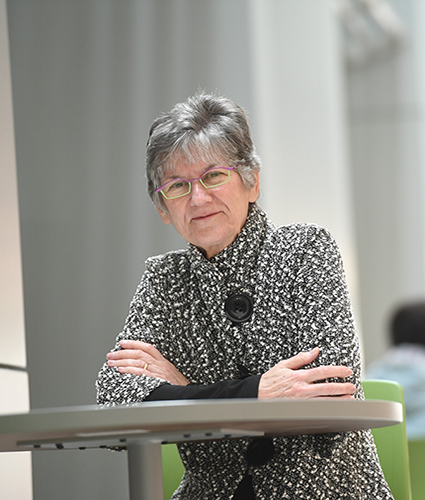
Marilyn MacDonald
Marilyn Macdonald is a Professor in the School of Nursing, and Director of the Joanna Briggs Centre of Excellence in the conduct of systematic reviews at Dalhousie University. She served as Theme Lead for Transitions in Care with the Canadian Frailty Network and Nova Scotia Lead for the Pan-Canadian Safety in Home Care study. She has a varied background in clinical nursing including general surgery, neurosurgery, cardio-vascular surgery, public-health nursing, home care, and a decade as a clinical nurse specialist. Her research population of interest is the older person in relation to home care, unpaid caregivers and care systems integration. Her research has contributed to mapping the terrain of safety in home care, recommending changes in home care delivery, and setting priorities for research in this domain.
Marilyn MacDonald
Professor, Dalhousie University
Marilyn Macdonald is a Professor in the School of Nursing,…
Project Outputs
Supplementary File #1: PRISMA Flow Diagram
Supplementary File #2: PRISMA-ScR Checklist
Supplementary File #3: Appendix 3 – Study Characteristics
Click the image below to view the research spotlight.